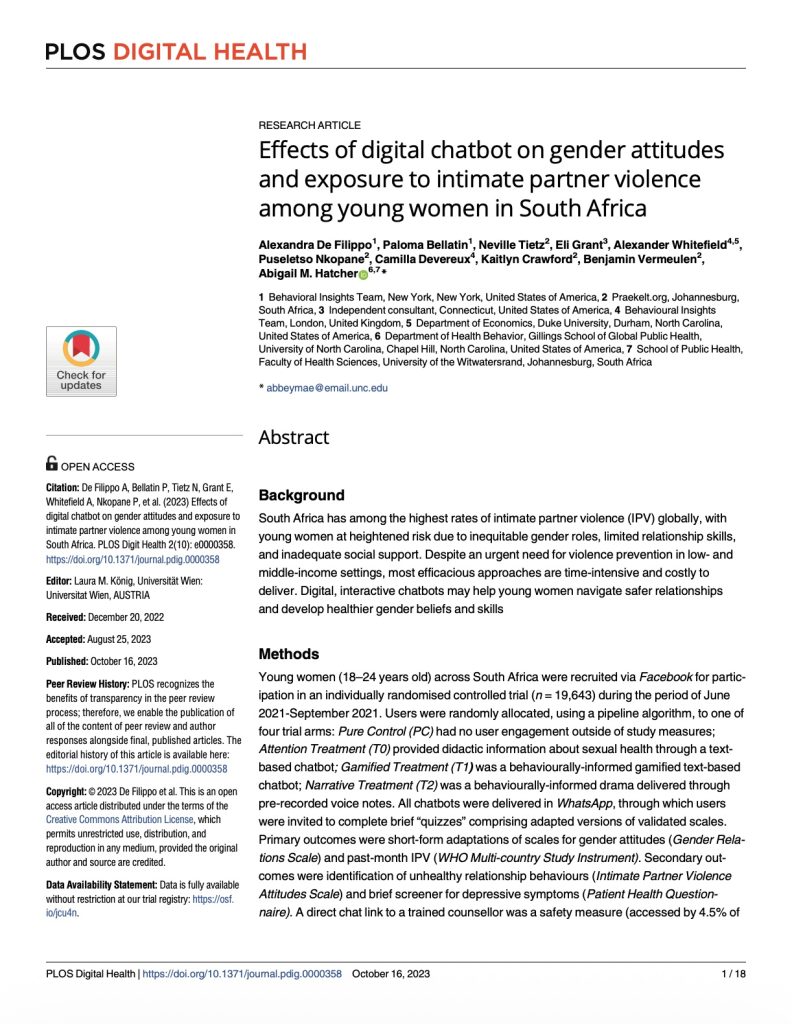
Harnessing technology and AI to make violence prevention more effective and scalable.
Technology is transforming what is possible in violence prevention, and the field must help shape that transformation. Tech4Prevention is our commitment to articulate how technology can be used as a positive force for violence prevention, while ensuring that women’s organisations and violence prevention actors are not left behind. Over the next four years, we are building the evidence base, establishing ethical principles, cultivating strategic partnerships, and co-designing pilot projects that put these tools to work in real prevention contexts.
The violence prevention field is only beginning to reckon with what technology makes possible. Digital delivery strategies can extend the reach of prevention programmes into communities that would otherwise never access them, addressing one of the field’s most persistent challenges: delivering cost-effective, quality programming at scale. Conversational AI tools, for example, can support frontline facilitators between training sessions, serving as a co-pilot for implementation, helping practitioners respond to difficult situations, and reinforcing learning over time. AI tools also hold real potential for identifying and monitoring the deeply held beliefs and norms that drive gender inequality and violence. We will begin this work by publishing a foundational paper that charts the applications of AI and digital tools in the violence prevention space.
“Technology4Prevention: Harnessing the power of technology to work smarter”
The violence prevention field must become proficient in using and shaping the technologies that affect our work and impact. We will cultivate partnerships with women’s groups, tech organisations, academics, and donors to equip the field to use AI and emerging technologies to enhance the efficiency and effectiveness of prevention work, while centring human well-being, lived experience, and expertise. At the same time, technology is a tool, not a solution. Its potential to support violence prevention is real, but so are its risks. AI systems can embed and amplify existing biases. As we co-design pilot projects, we are investigating the potential and risks of AI and digital delivery in VAW/C prevention contexts, and establishing ethical principles to guide their use. These principles will underpin everything we build and advocate for in this space.
Grounded in our foundational research and ethical framework, we will co-design and implement at least two digital or AI-related pilot projects over the next four years. Through a strategic partnership with the Institute for Security Studies (ISS) and the South African Parenting Programme Implementers Network (SAPPIN), we are exploring the technology-assisted delivery of Free to Grow—a gender‑transformative, workplace-based family violence prevention programme in South Africa. This collaboration aims to enhance frontline facilitator training, reinforce participant learning between sessions, and expand the programme’s reach.
AI Evidence Playbook
Using a Digital Parenting Intervention to Prevent Intimate Partner Violence and Promote Gender Equitable Behaviours in South Africa and Jamaica: A Qualitative Study Exploring Partnered Parents’ Experiences of ParentText
The Promise of Digital Technology and Generative AI for Supporting Parenting Interventions in Latin America

Insights: ChattyCuz